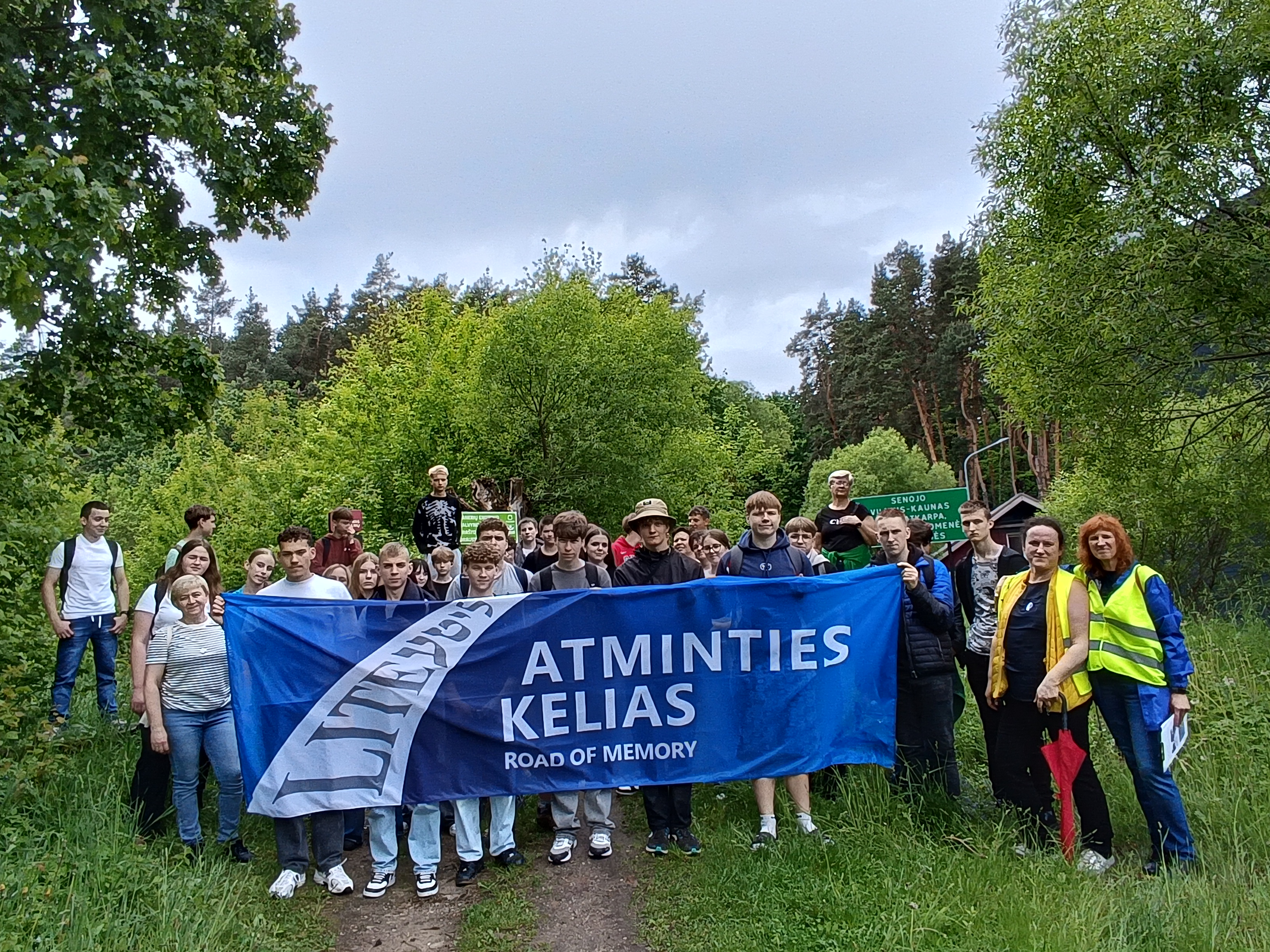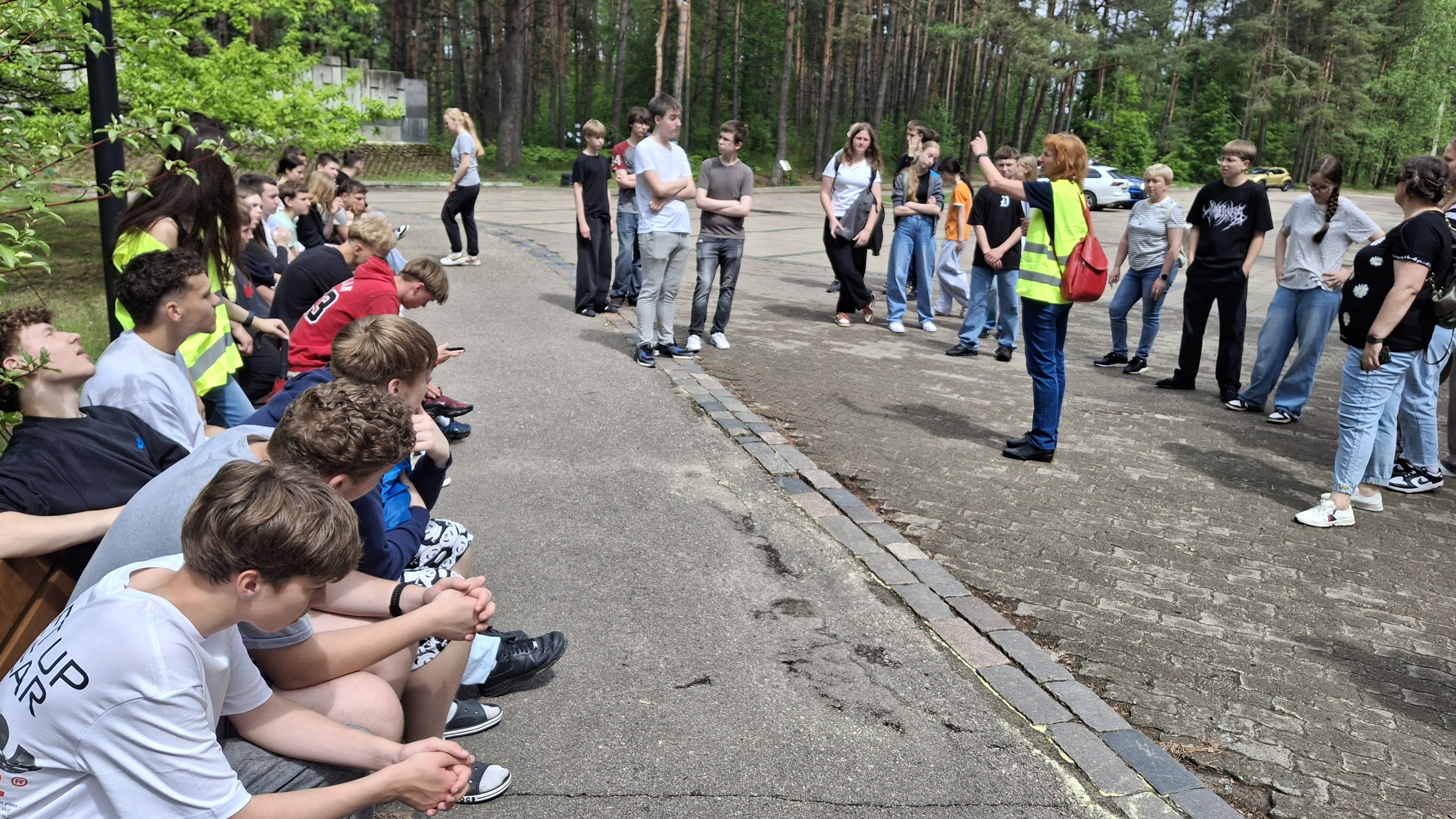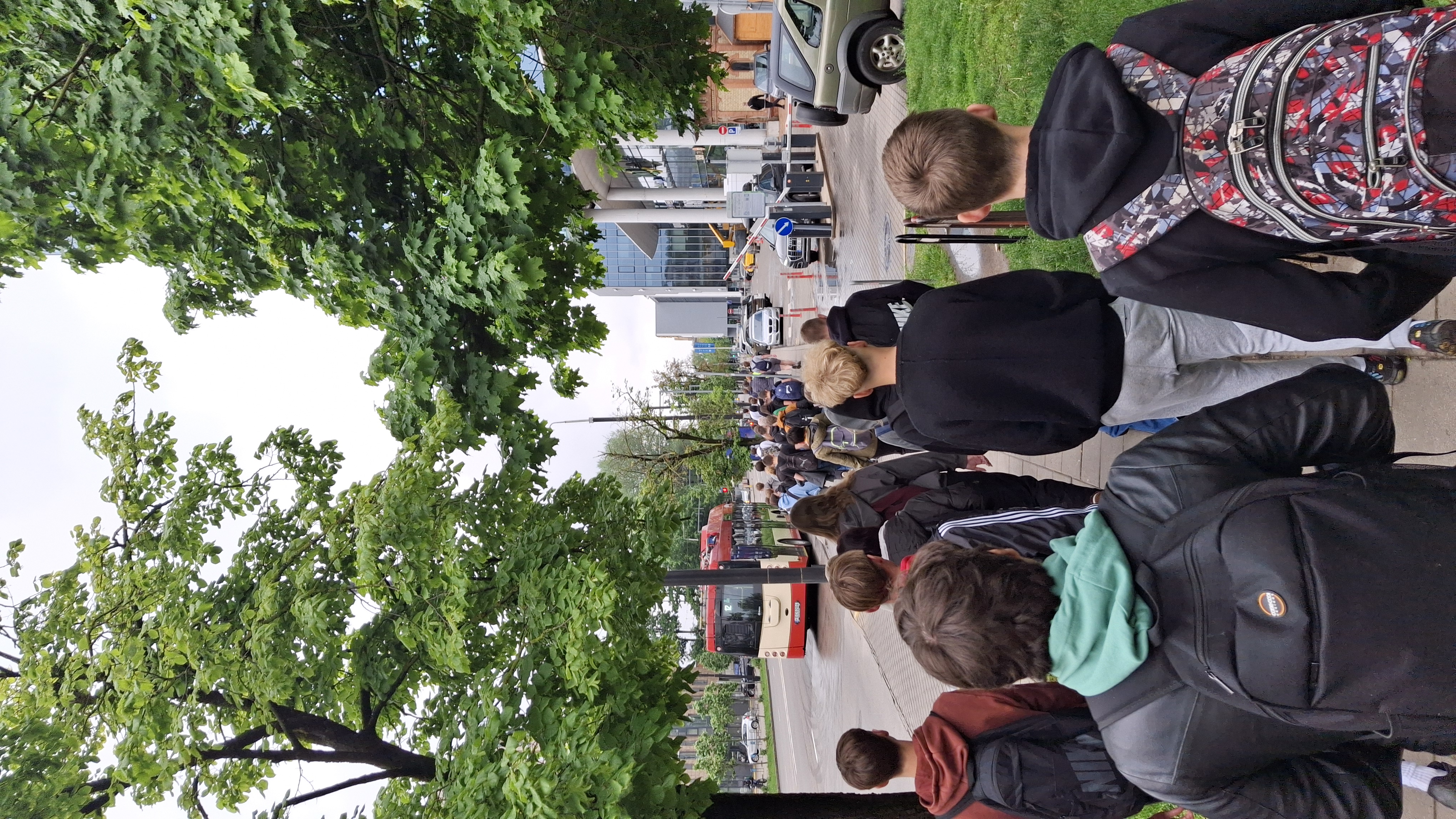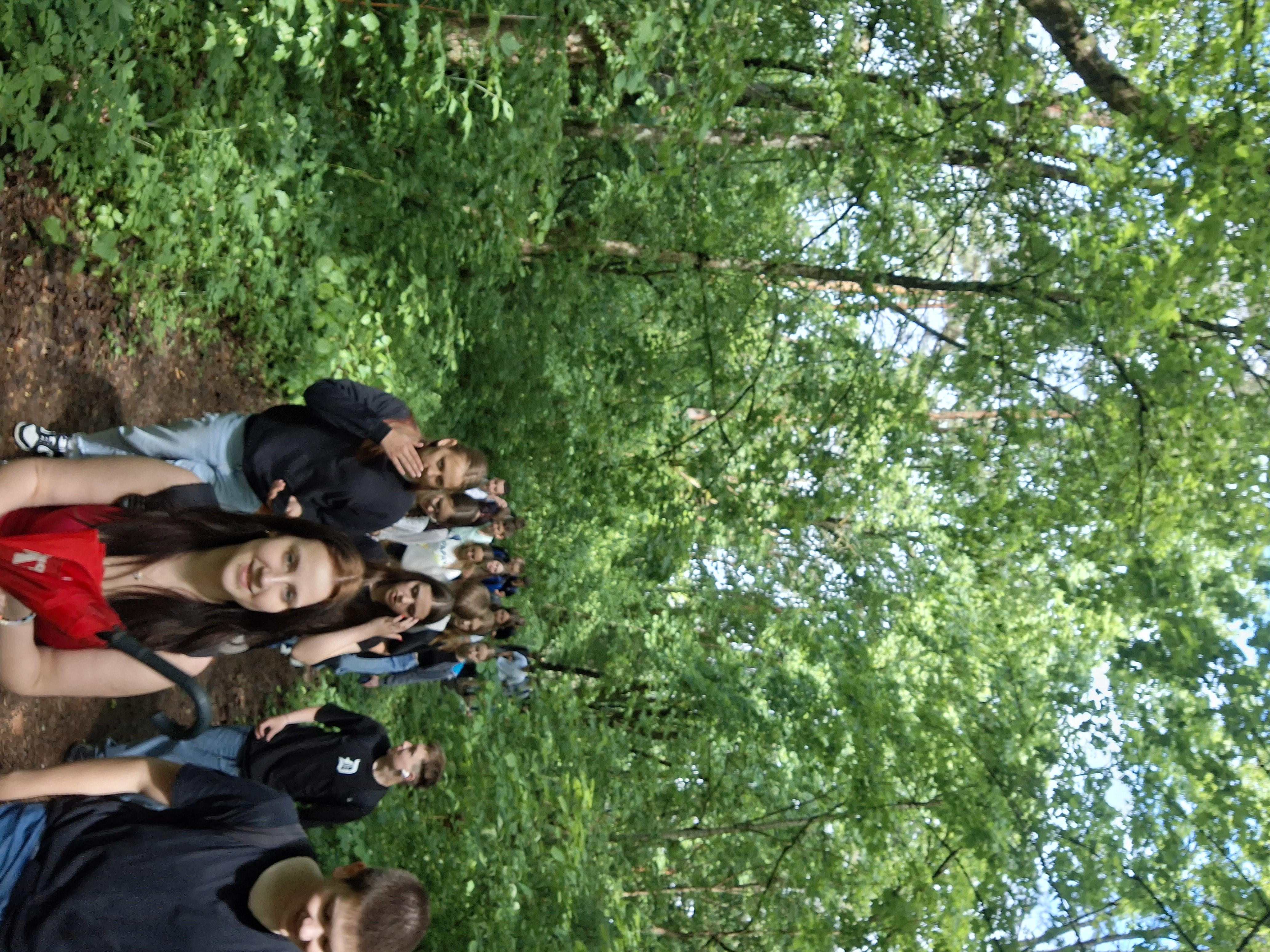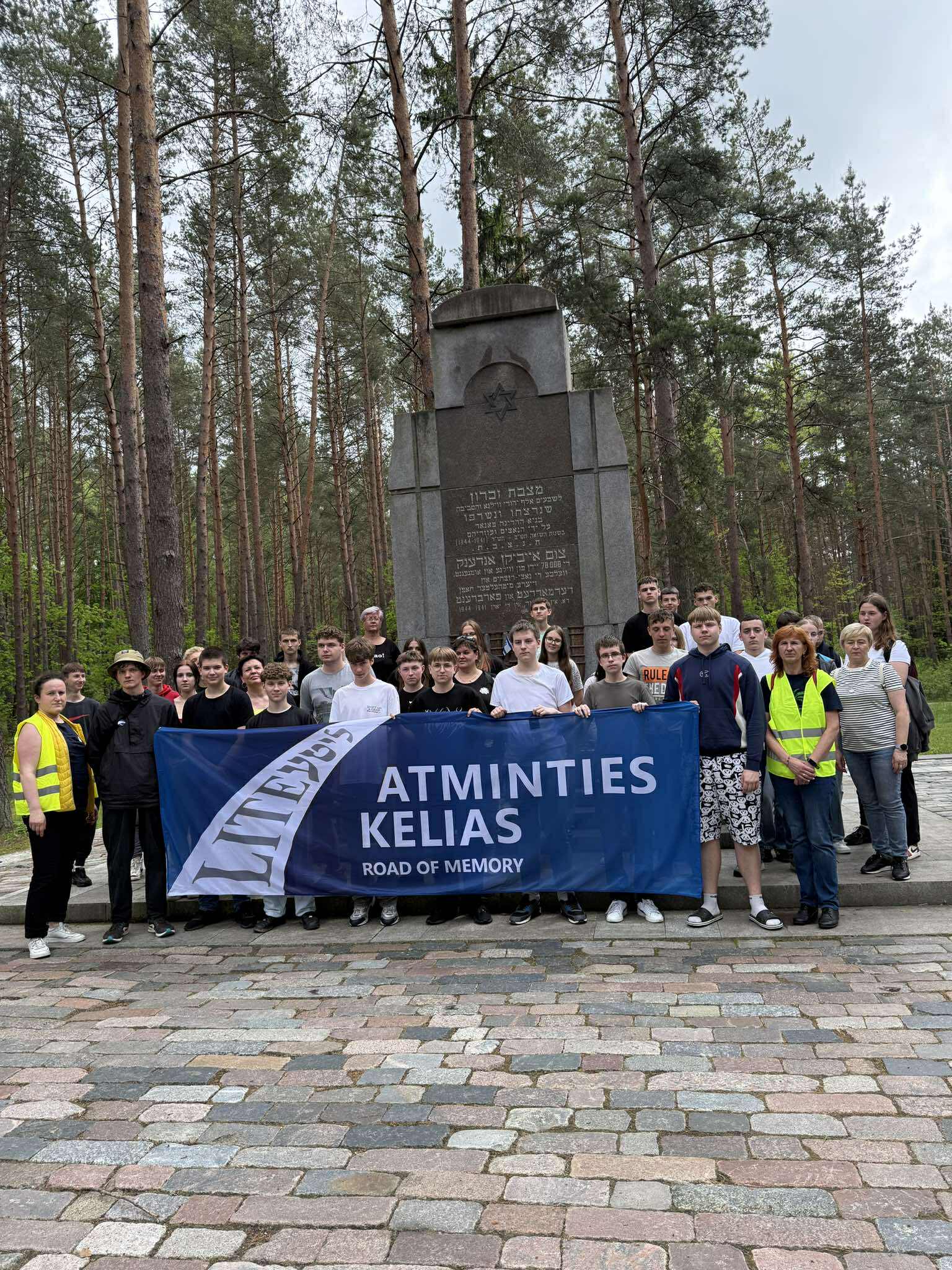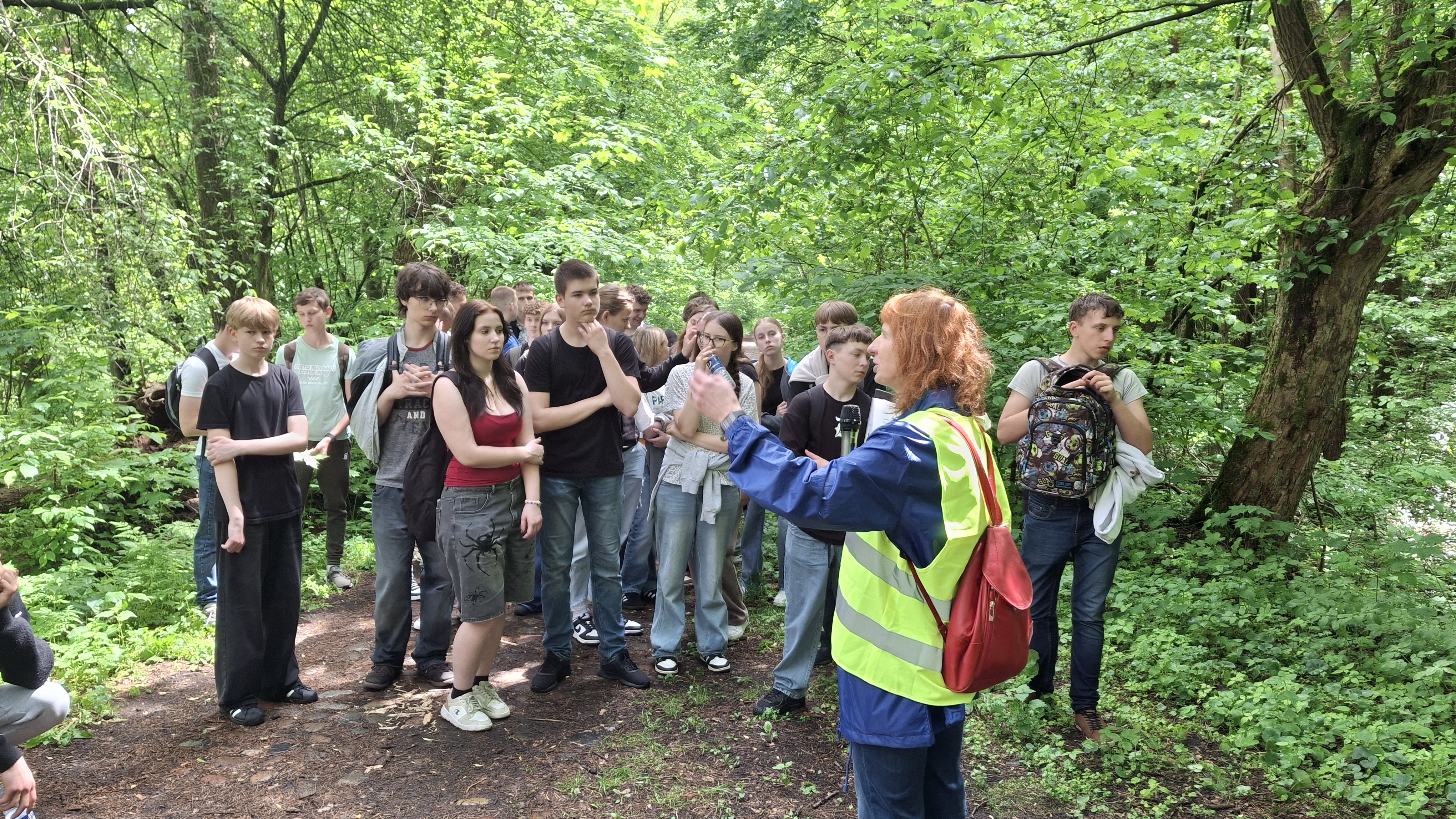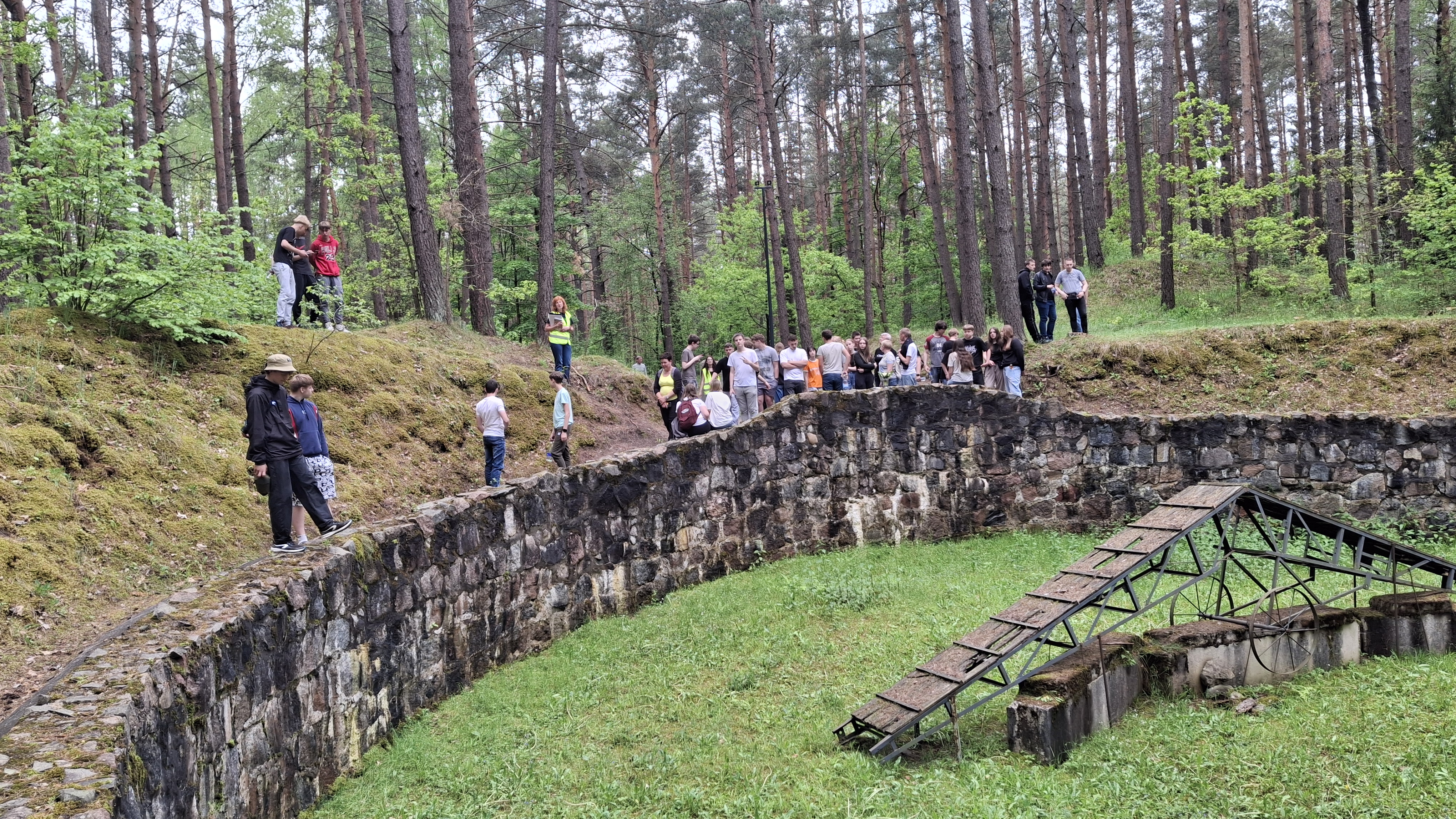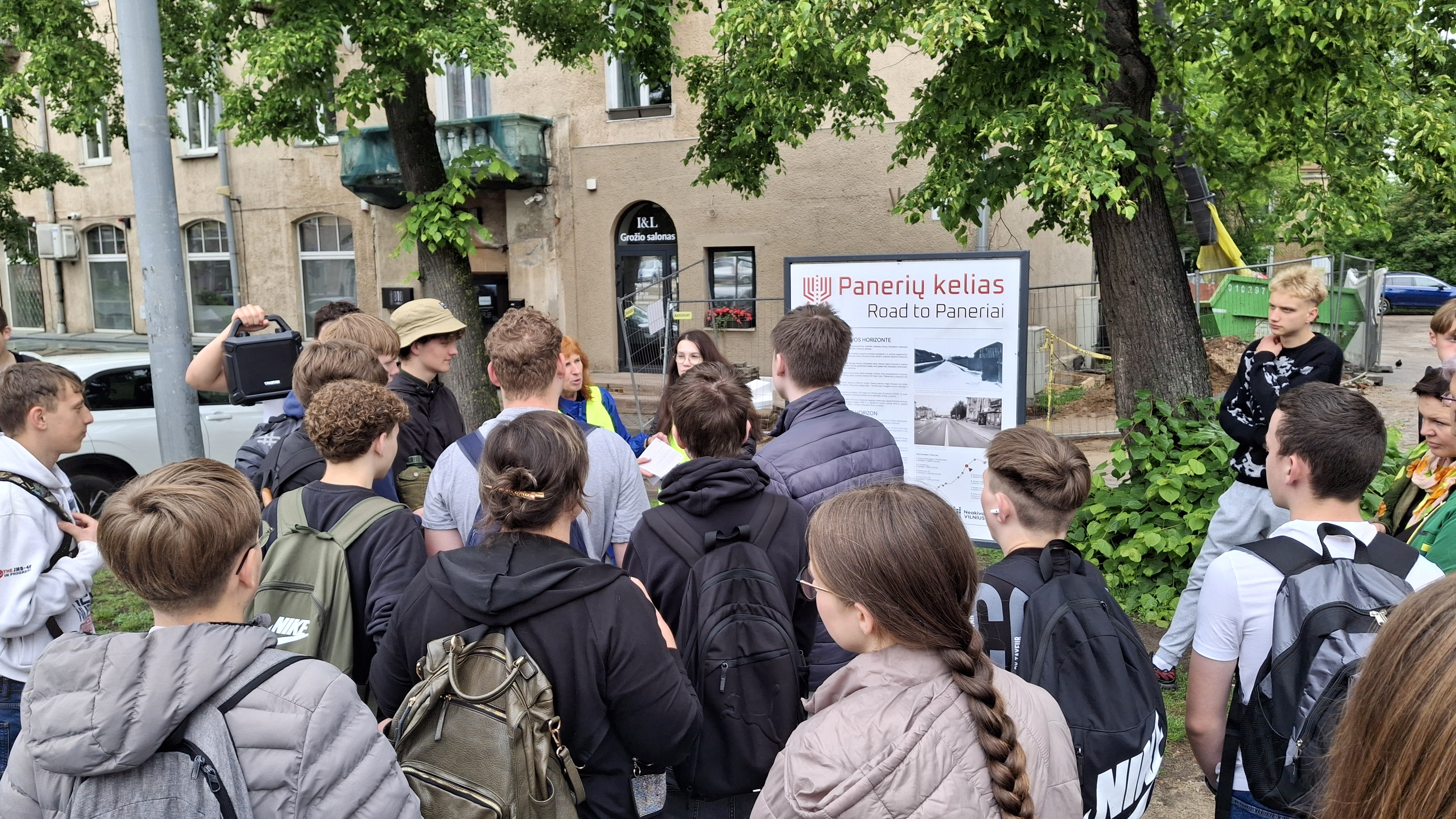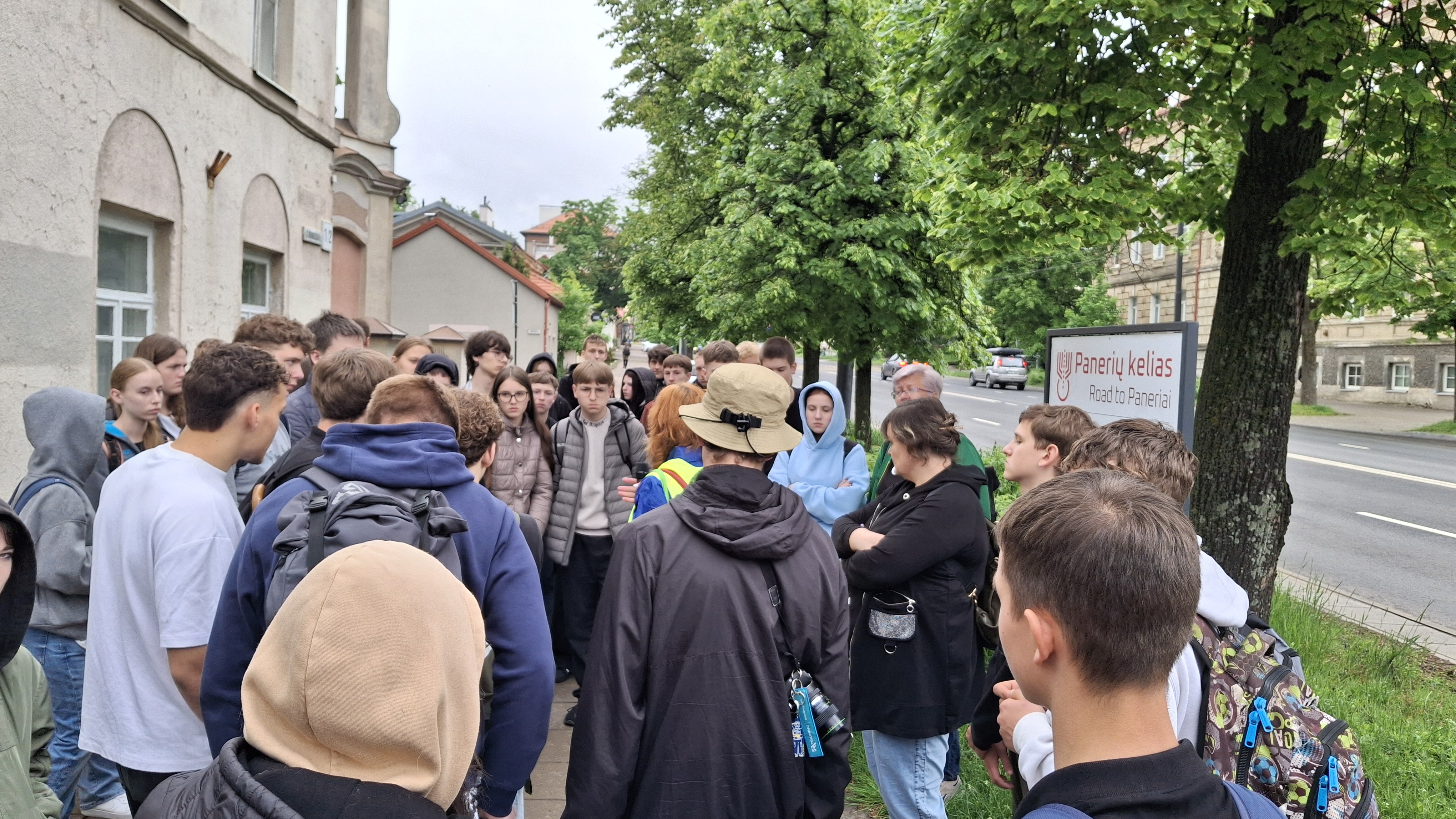
On May 29, representatives from five educational institutions participated in the march from Vilnius to Paneriai.
Forty-two students, accompanied by six teachers and members of the educational staff, took part in the march from Konarskis Street to the Paneriai Holocaust Memorial. They covered a distance of 8 to 9 kilometres. The march began at the St. Jacek sculpture, which marks the boundary of Vilnius as it was about a hundred years ago. Beyond this point, it was no longer city territory. The first information board was erected here. It tells the story of the Jewish prisoners of the Vilnius Ghetto who were driven to their deaths along this road to Paneriai between 1941 and 1943.
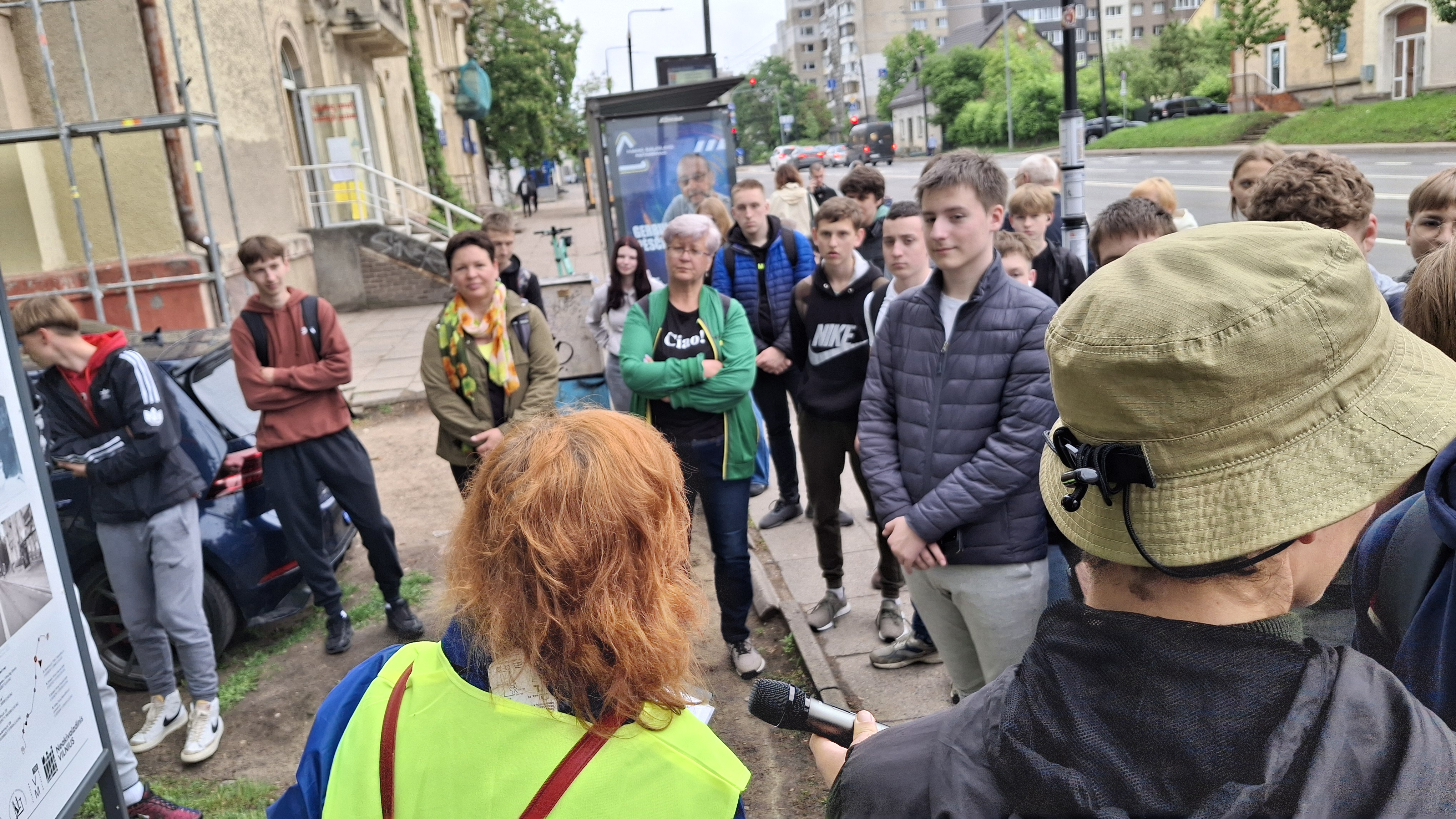
During the march, the group stopped at each of the information boards prepared by the Jewish Culture and Information Centre in Vilnius. These stops enabled students to learn about specific historical figures and events connected to the route. Ingrida Vilkienė, coordinator of the International Commission’s educational programmes, stopped at each information board and recounted the history of the road and the story of Akiva Gershater. Gershater’s photographs, taken in 1944, depict the historical route, and he was saved from death by the traveller Antanas Poška. The journalist Kazimieras Sakovičius, who documented the Paneriai massacre in a calendar, was also mentioned during the march. Upon reaching the section of the historical road in the Paneriai hills, the students learnt about the gang of robbers that rampaged along this road in the 19th century and about the battle between the rebels of the 1830-1831 uprising and the Tsarist Russian army, which resulted in a devastating defeat for the rebels. These stories helped participants gain a deeper understanding of the site’s history.
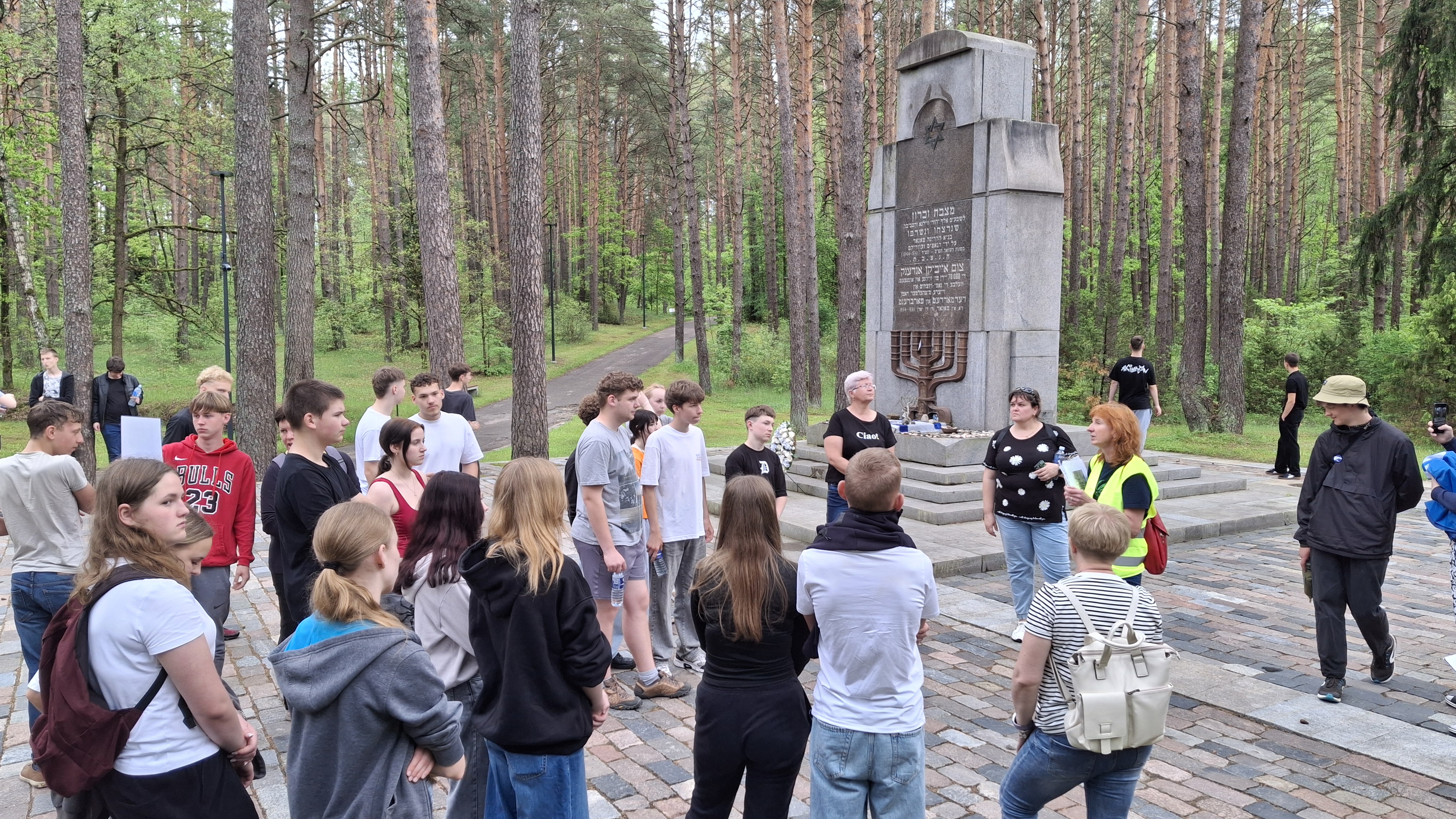
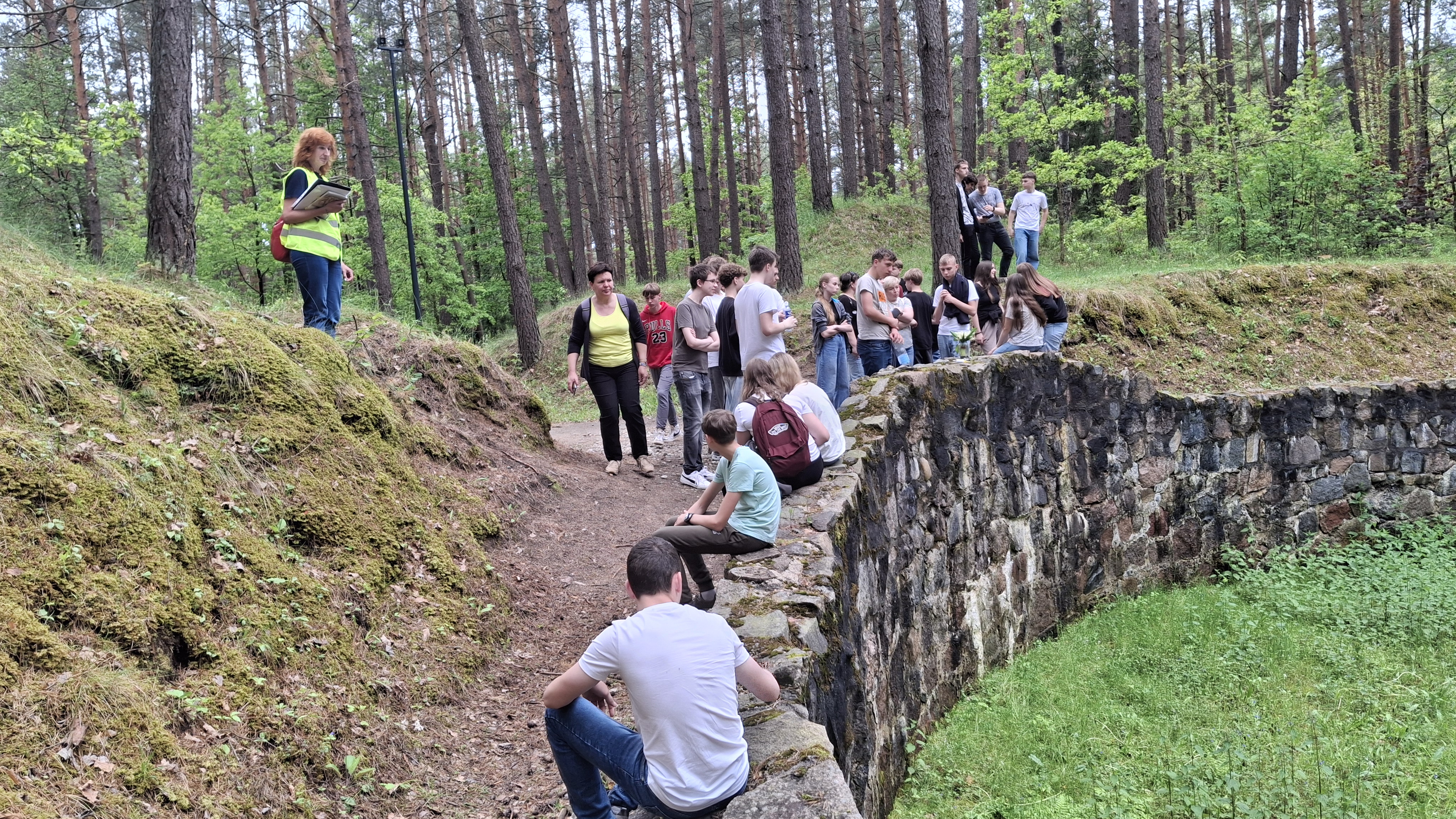
After marching for two and a half hours, the participants reached the Paneriai Memorial. The students learned about the site’s history. They visited its monuments and heard stories about the prisoners who escaped. These prisoners, known as the corpse burners, fled from the terrible Paneriai death camp through a secret tunnel dug in 1943. The march was attended by representatives from the Igliauka Anselmas Matutis Gymnasium, Marijampolė Vocational Training Centre, Petras Aminas Pro Gymnasium, Sūduva Gymnasium, and the Meilė Lukšienė Educational Centre from Marijampolė municipality.
The march was organised by the Secretariat of the International Commission for the Evaluation of the Crimes of the Nazi and Soviet Occupation Regimes in Lithuania, in partnership with the Jewish Culture and Information Centre in Vilnius.