On 6 October, an event was held in Semeliškės – the “Road of Memory 1941–2026” march.
This commemorative event was held to remember the 962 Jews from Semeliškės, Vievis, and Žasliai murdered 85 years ago. It began outside the building that served as a temporary ghetto in 1941. Next to the building, a screen displayed drawings by schoolchildren who took part in a 2016 drawing competition titled “I Draw Jerusalem”. Journalist and social activist Silvija Bielskienė opened the event and gave a historical overview of the Holocaust in Semeliškės. According to her, “On 6 October 1941, 962 Lithuanian citizens of Jewish nationality from Semeliškės, Vievis, and Žasliai were murdered in Semeliškės: 213 men, 359 women, and 390 children (261 of whom were from Semeliškės)”.
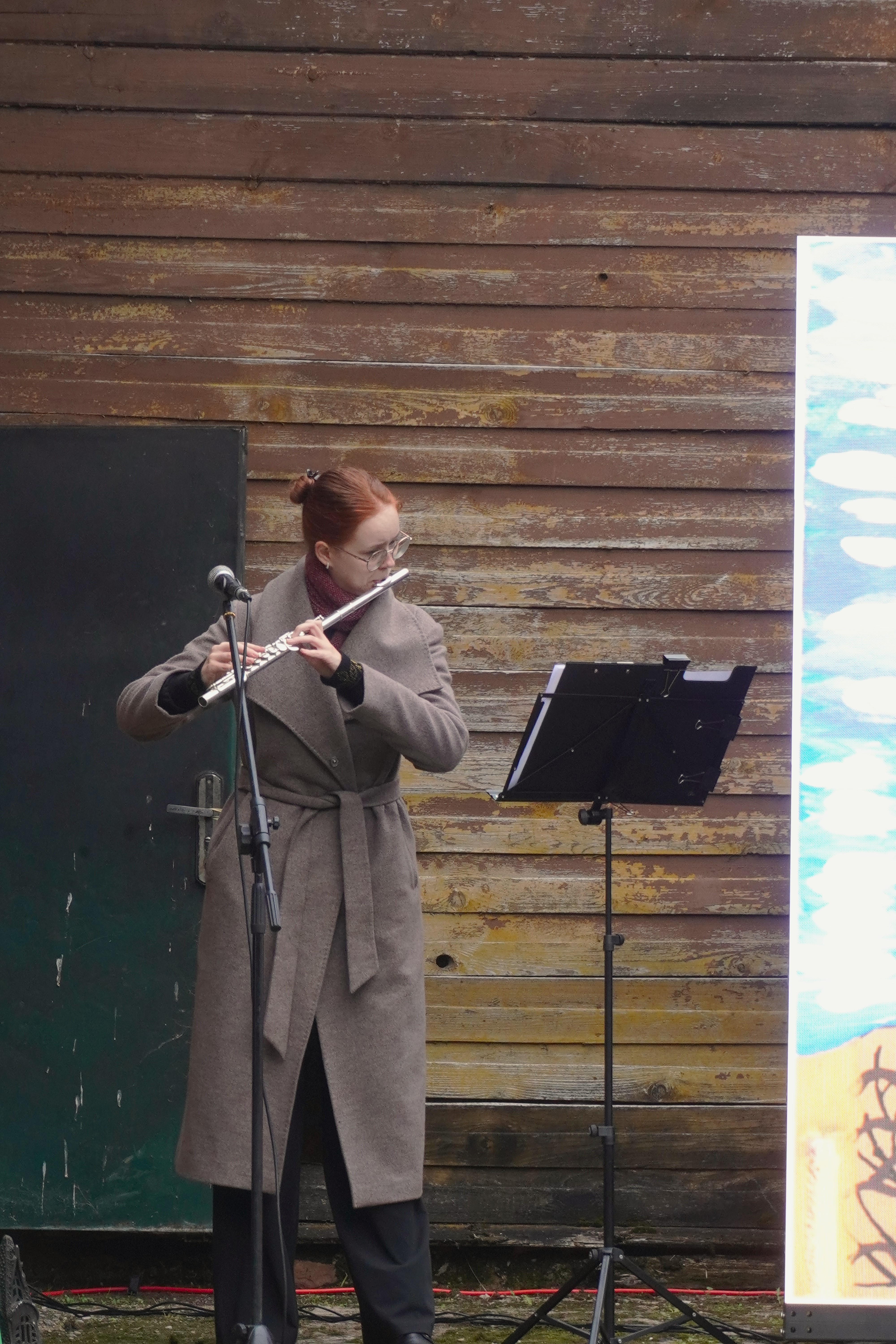
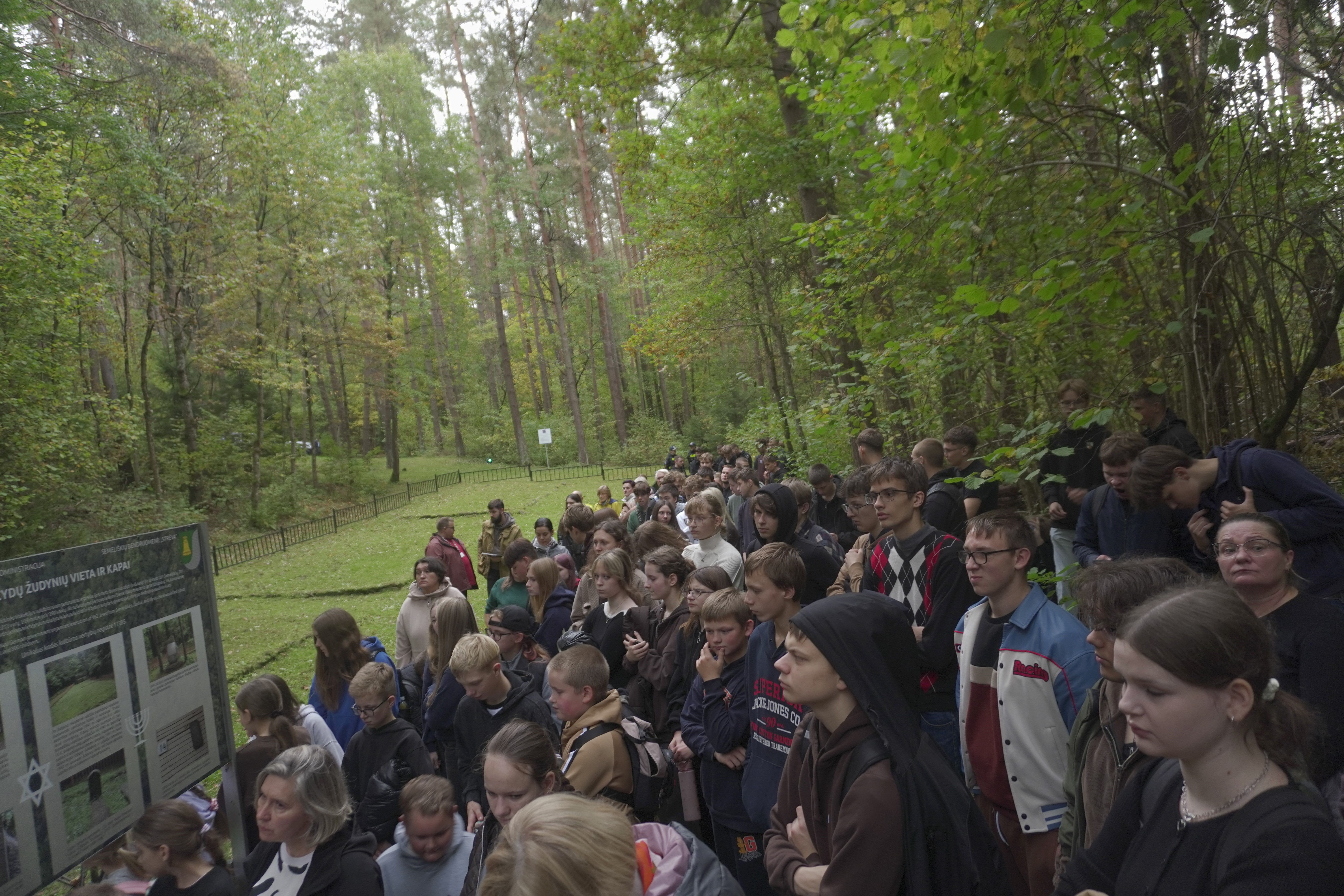
The march then continued from the former ghetto site to the Holocaust victims’ memorial site in the Dergionys Forest. A commemorative ceremony was held at the mass grave of the Jewish victims. Speeches were given by Shelly Hugler Livne, Israel’s Ambassador to Lithuania; Gediminas Ratkevičius, Mayor of Elektrėnai Municipality; and Ingrida Vilkienė, Deputy Head of the Secretariat of the International Commission for the Evaluation of the Crimes of the Nazi and Soviet Occupation Regimes in Lithuania, and Education Program Coordinator. Each speaker first addressed the large gathering of students taking part in this non-traditional history lesson. In accordance with an ancient Jewish tradition, small stones were placed at the burial site and memorial. As the sorrowful sound of a flute played, those gathered read aloud the names and ages of the 421 local Jews who were murdered, a figure that Silvija Bielskienė had found in the Yad Vashem database at the Holocaust Memorial Center in Jerusalem.
Semeliškės holds commemorative events annually.
The event was attended by teachers and students from Semeliškės Gymnasium and the Elektrėnai Vocational Training Center, representatives of the Elektrėnai District Municipality, staff from the Israeli Embassy, a representative of the Secretariat of the International Commission, and members of the local community.